What sealing does
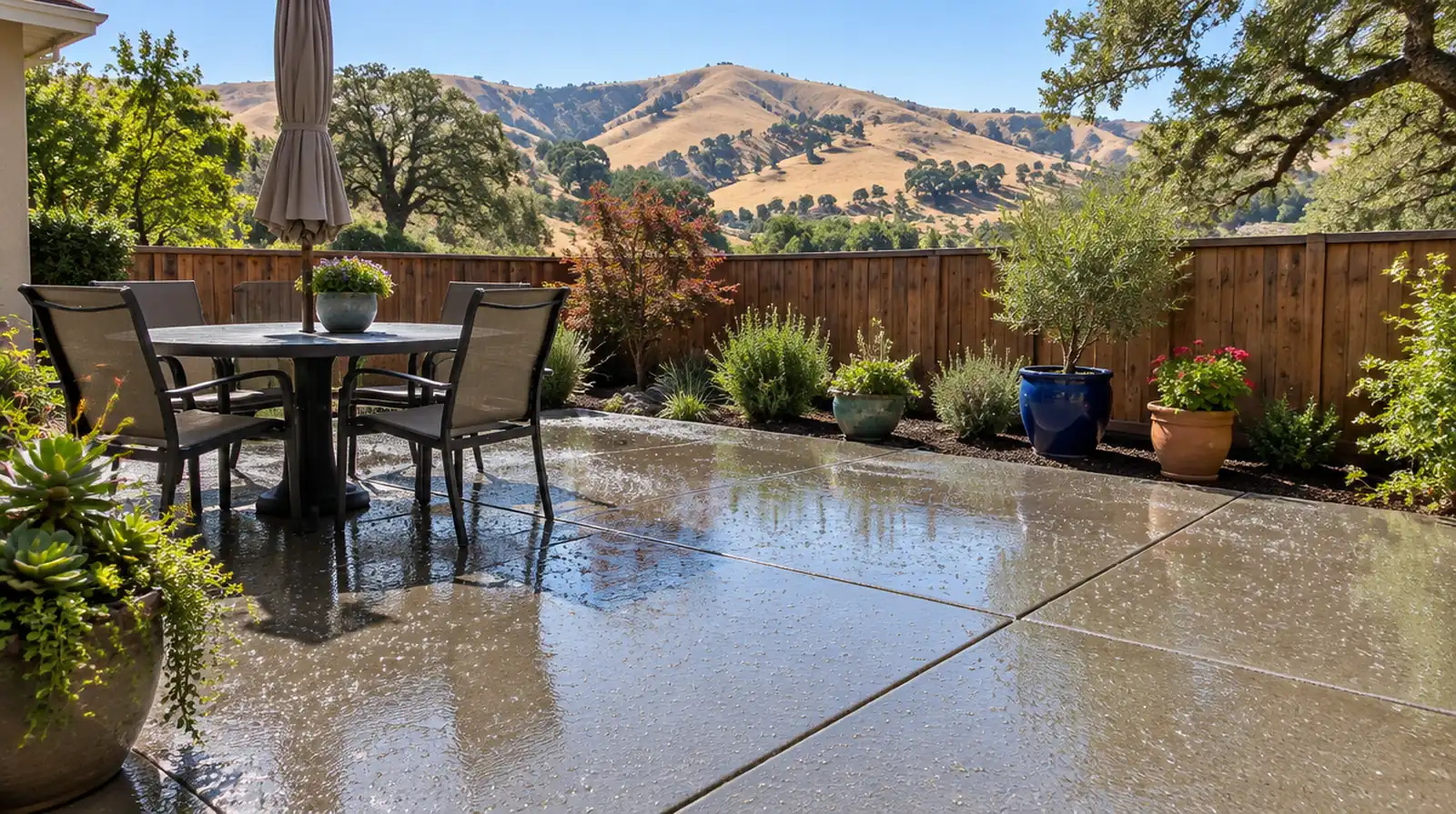
Bare concrete is porous. It soaks up water, oil, wine, leaf stains and fertilizer. In winter, rain and sprinkler water carry dirt into it. In summer, strong sun dries and weathers the surface. A sealer closes off those pores. Water beads up, spills stay on top long enough to wipe up, and the concrete holds its color.
Two kinds of sealer
Penetrating sealers
These soak into the concrete and react inside it. They do not change the look much and leave no film on top, so they will not peel or get slippery. They are our usual choice for driveways, walks, pool decks and outdoor patios.
Topical sealers
These form a thin film on top and can add a wet look or slight sheen. They are good for stamped and colored concrete where you want the color to pop. They wear over time and need to be reapplied every few years.
Where sealing makes sense here
- Back patios that get barbecue grease, wine spills and leaves.
- Pool decks, to resist chlorine and water stains.
- Front walks and entries that get sprinkler overspray.
- Garages where you want protection but not a full coating.
- Barn and shop floors that mostly need dust control.
Hard water and sprinklers
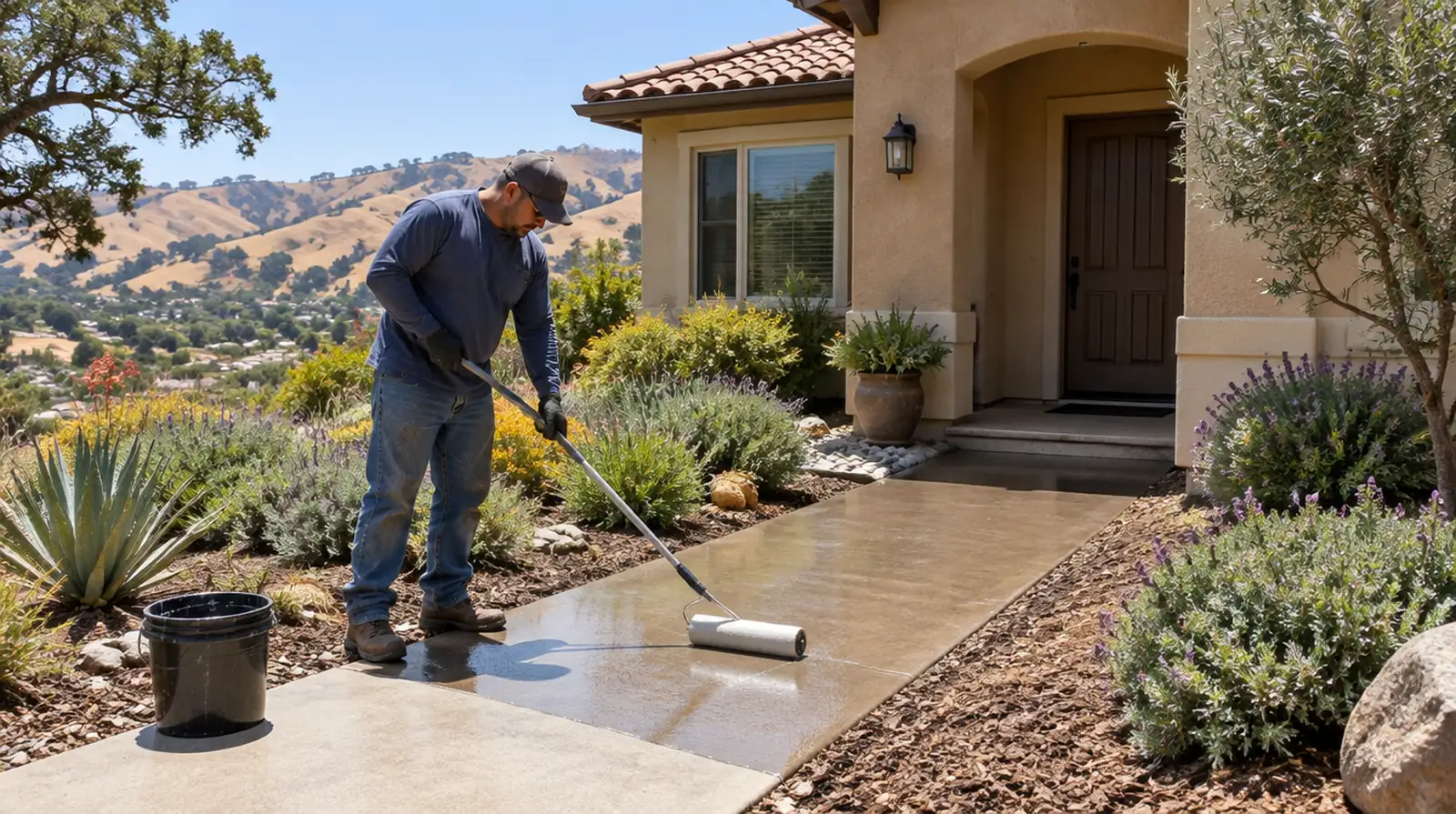
Gilroy's water can leave white mineral marks on concrete, especially where sprinklers hit the same spot every day. Sealing helps by keeping the water from soaking in and drying inside the surface. We also suggest adjusting sprinkler heads so they water the plants instead of the slab. If you already have heavy white staining, we clean it before we seal.
Our sealing process
- Clean. Pressure wash and degrease. For oil stains, we use a poultice or degreaser to lift as much as possible.
- Dry. The slab has to dry before sealing. In winter we watch the forecast.
- Repair. Fill small cracks if you want them filled.
- Apply. Spray or roll the sealer evenly and back-roll to work it in.
- Cure. Foot traffic in a few hours, cars the next day for most products.
Sealing new concrete
If you just poured a new patio or driveway, wait until it has cured, usually about a month, before sealing. Sealing a new slab early in its life protects it from the first rounds of stains and weathering, which are the hardest to undo later.
When a coating is better
A sealer protects, but it does not hide stains, cracks or wear. If your garage floor is badly stained, or you want a finished look, a coating or flake floor is the better choice. For exterior drives that are worn and stained, see driveway coatings.
Sealing questions
How often should I reseal?
Penetrating sealers often last several years outdoors. Topical sealers usually need a refresh every two to three years.
Will it change the color?
Penetrating sealers barely change the look. Topical ones can darken it slightly.
Will it be slippery?
Penetrating sealers are not. We can add grit to topical sealers.
Patios, pool decks and the long dry season
Backyards here get a lot of use from spring through fall. Barbecues, pool parties and dinners outside under a shade sail all leave their mark on a patio. Grease from the grill, red wine, sunscreen and chlorinated water each leave a different kind of stain. Sealing makes the difference between a quick rinse and a stain that is there for good. Around pools we choose sealers that keep their grip when wet and handle pool chemicals. On patios shaded by oaks or fruit trees, we pay attention to tannin and fruit stains, which are some of the hardest to lift once they set into bare concrete.
Ranch properties bring other needs. Equipment pads, barn aisles and wash areas take fuel, oil and manure. A good penetrating sealer stops the slab from dusting and makes those surfaces much easier to hose off. We can also seal the concrete aprons in front of shop doors, where trucks turn and mud collects in the winter.
If you are not sure which sealer is right, we will test a small area so you can see how it looks and how water behaves on it before we do the whole job.
Get a sealing quote
Call (669) 334-9920 for a free estimate.