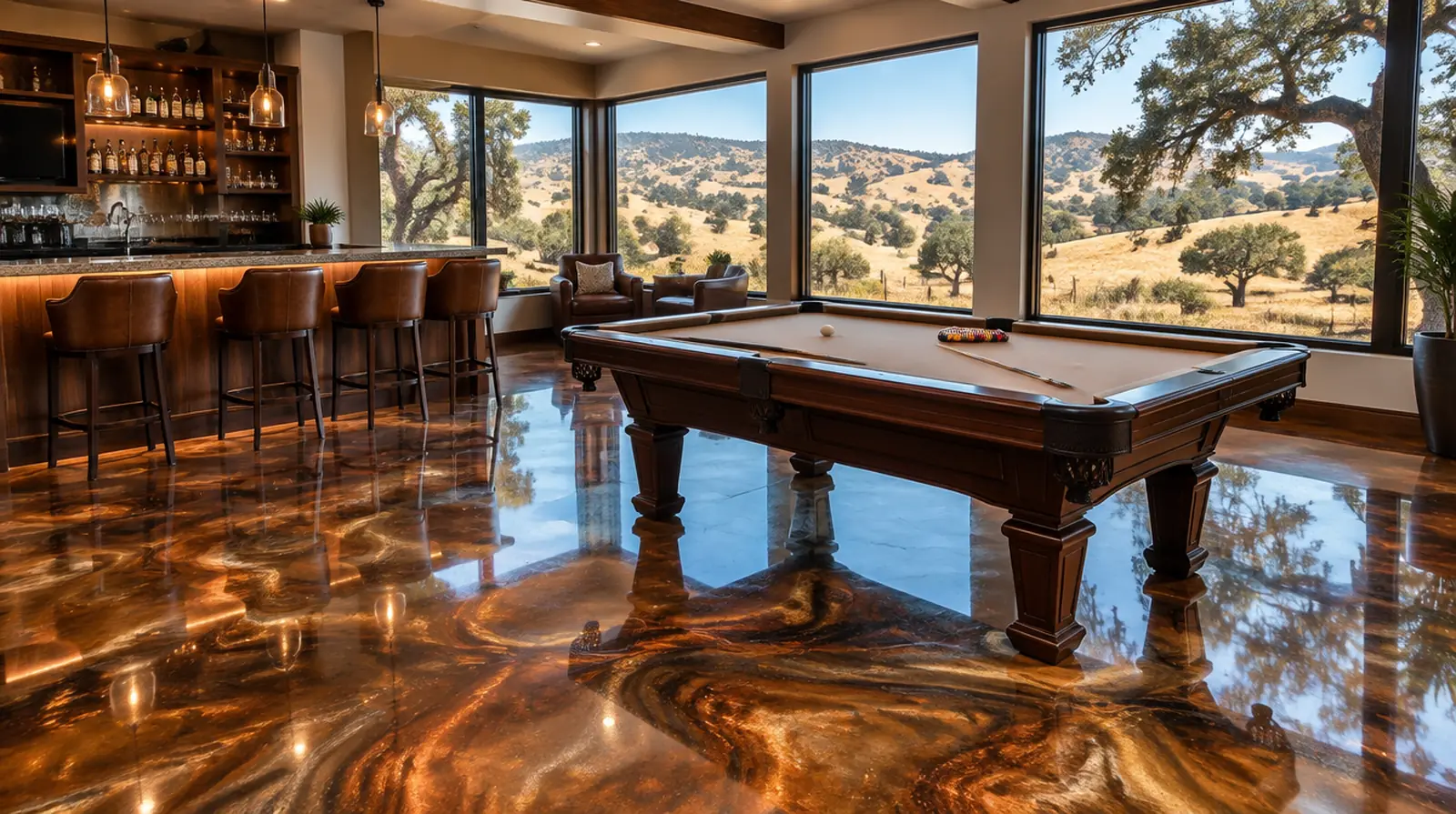
What a metallic floor is
A metallic floor is a clear epoxy mixed with fine metallic or pearl pigment, poured over a dark base coat and worked by hand while it is still wet. As the installer moves the resin with rollers, trowels and sprayers, the pigment flows into swirls and veins. No two floors come out the same. The finished floor has real depth, like looking into polished stone or water.
It is a decorative floor first. It is tough and easy to clean, but it is chosen for how it looks.
Where it fits in a Gilroy home
- Home gyms and game rooms in converted garages or bonus rooms.
- Showpiece garages for classic cars and motorcycles.
- Living spaces on slab foundations, where carpet and laminate have worn out.
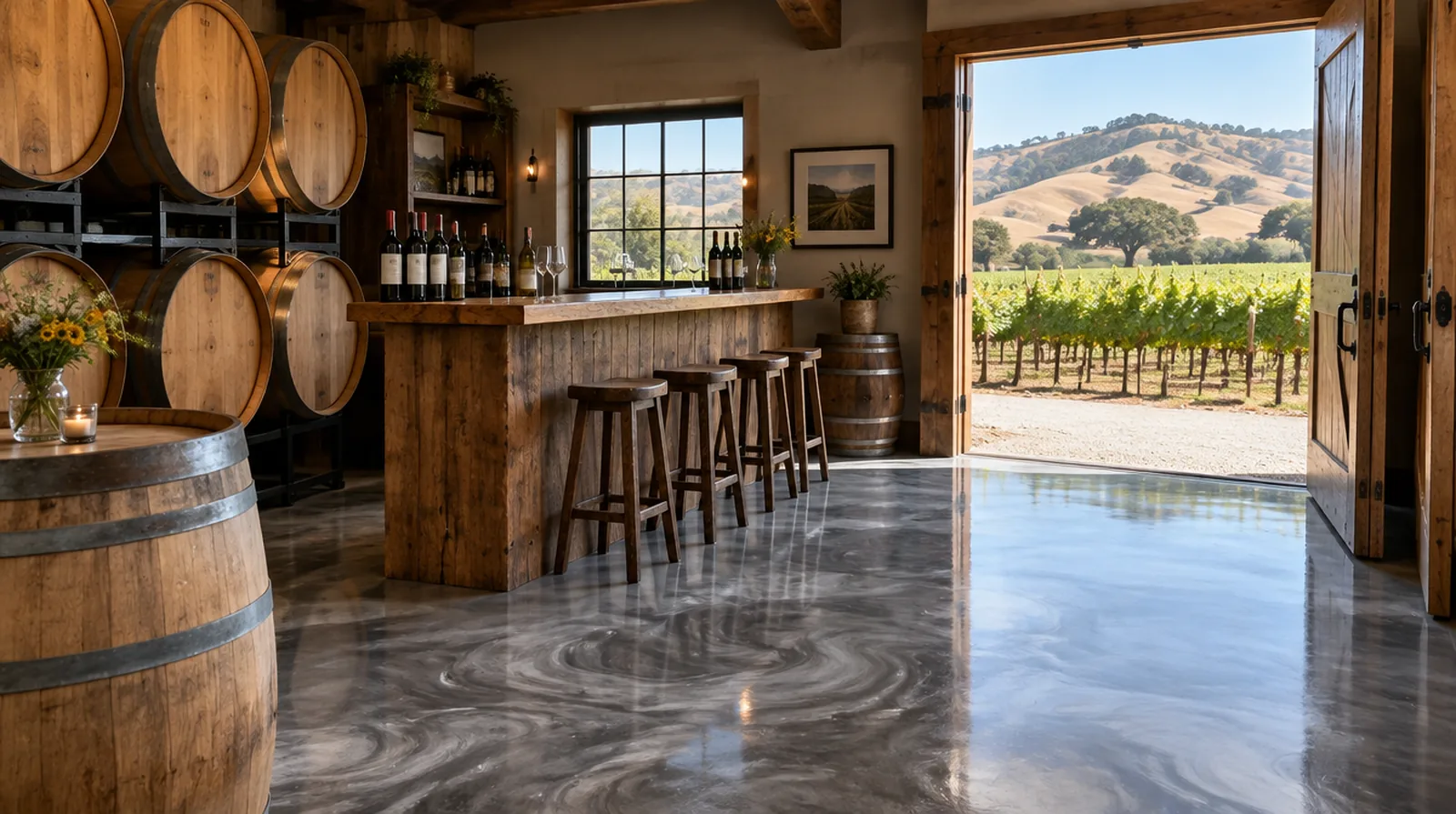
- Home bars and wine rooms, which fit right in with the wine country along Hecker Pass.
Where it fits in a business
Tasting rooms, salons, boutiques, auto showrooms and small offices use metallic floors to stand out. The floor becomes part of the brand. Because it is seamless, there are no grout lines to trap spills, which matters for food and drink service. For high-traffic retail, we add a clear urethane topcoat to protect against scratches from shoes and chairs.
Our process
- Prep. Grinding and repair, just like any floor. Metallic finishes show flaws, so we spend extra time getting the slab flat.
- Primer and base. A tinted base coat, usually black, charcoal or a deep color, sets the background.
- Metallic pour. We pour and work the metallic layer in sections, building the pattern you chose.
- Topcoat. A clear coat adds scratch resistance and can be glossy or satin.
A metallic pour needs steady temperatures. In the hot months we schedule pours for the cooler morning hours and keep doors closed so the wind does not drop dust into the wet resin.
Picking colors and a look
Common choices are silver over charcoal, copper and bronze over black, and pearl white over gray. Deep blues and greens look great in game rooms. We show you finished sample boards and photos of real floors. You can also choose how much movement you want: a calm, cloudy finish, a marble-like veined look, or bold lava-style swirls.
Things to know first
- Metallic floors show dust and scratches more than flake floors. They suit rooms with lighter traffic or a topcoat built for wear.
- The final pattern is handmade. We guide it carefully, but it will not match a photo exactly.
- A metallic floor in a garage that gets direct afternoon sun needs a UV-stable topcoat to prevent yellowing.
- Tiny dust or bugs that land in wet resin can be sanded and recoated, but we work hard to keep the room closed and clean.
Care
Dust mop often. Damp mop with plain water or a pH-neutral cleaner. Use felt pads on furniture legs and mats at outside doors to catch grit. A satin topcoat hides fine scratches better than high gloss if you have pets or a busy household.
Metallic floor questions
How long does it last?
With a good topcoat and normal care, many years. The topcoat can be refreshed later without redoing the art layer.
Can you do it over tile?
We usually remove tile and coat the concrete. Coating over tile can crack along the grout lines.
Is it slippery?
It can be when wet. We can add a fine clear grit to the topcoat.
Garages that become living space
Many Gilroy families turn a garage or bonus room into a gym, a hangout space or a home office. A metallic floor is a popular choice for those rooms because it looks finished and modern without the cost of new tile or wood. We level the slab first, fill any slope toward the old garage door and make sure the transition to the rest of the house is smooth.
Plan a metallic floor
Call (669) 334-9920 for a free estimate.