What makes polyaspartic different
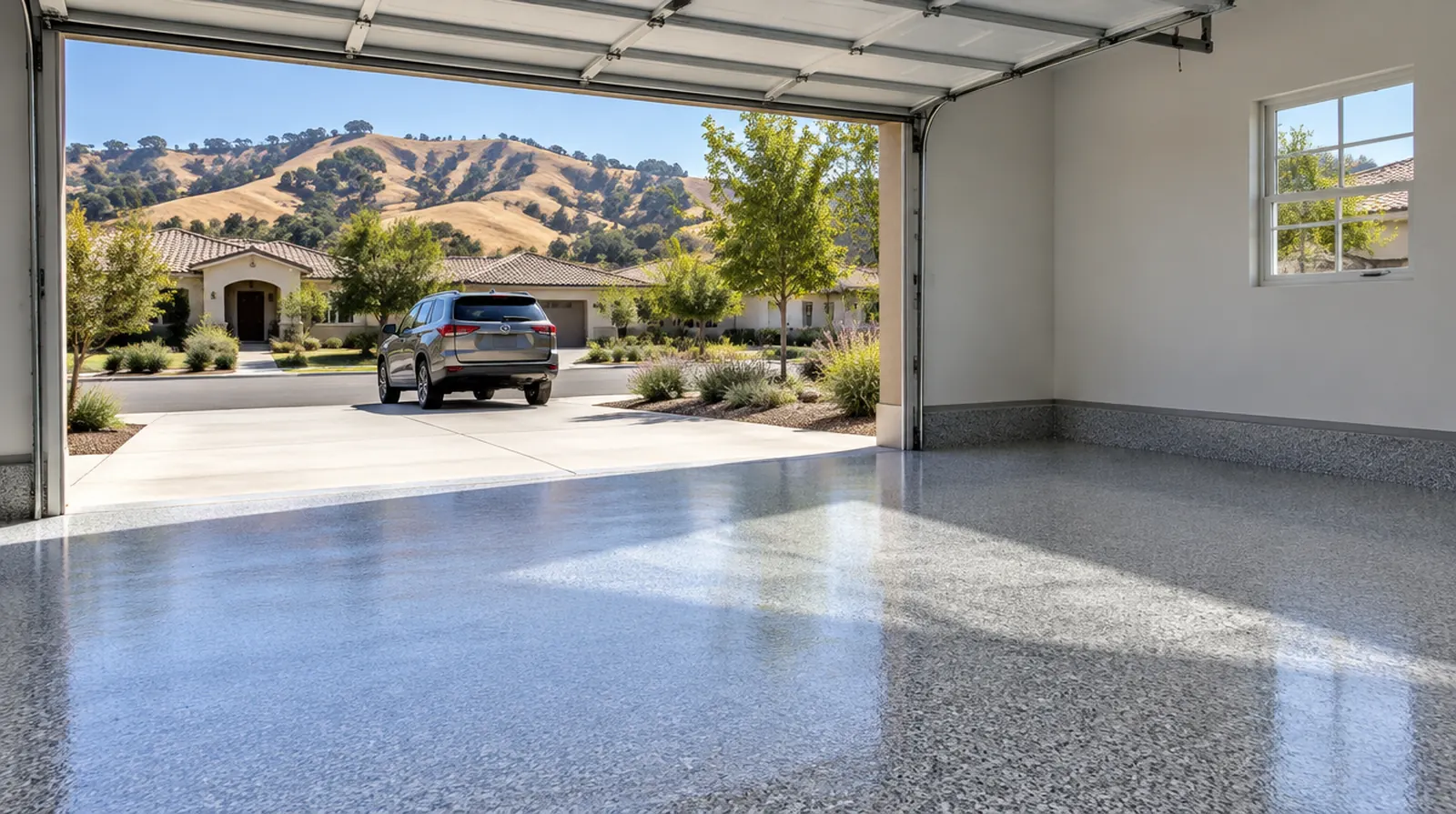
Polyaspartic is a newer type of coating related to polyurea. It cures much faster than epoxy, often hard enough to walk on in a few hours and ready for cars in about a day. It is also UV-stable, so it does not yellow in sunlight, and it is more flexible than epoxy, which helps it handle the temperature swings of a Gilroy day, when a warm afternoon can follow a cool morning by thirty degrees or more.
Why it suits Gilroy garages
Many garages here face the street with the door open for much of the afternoon. Sunlight hitting a regular epoxy floor every day slowly turns it amber. Polyaspartic keeps its color. It also stands up to hot tires better, which matters when summer temperatures send cars home from the freeway with tires hot enough to soften cheap coatings.
- Fast return to service, usually one day of work.
- Stays clear and color-true in sun.
- Strong resistance to hot tire pickup and chemicals.
- Works with full flake, solid color or clear.
Patios, porches and pool decks
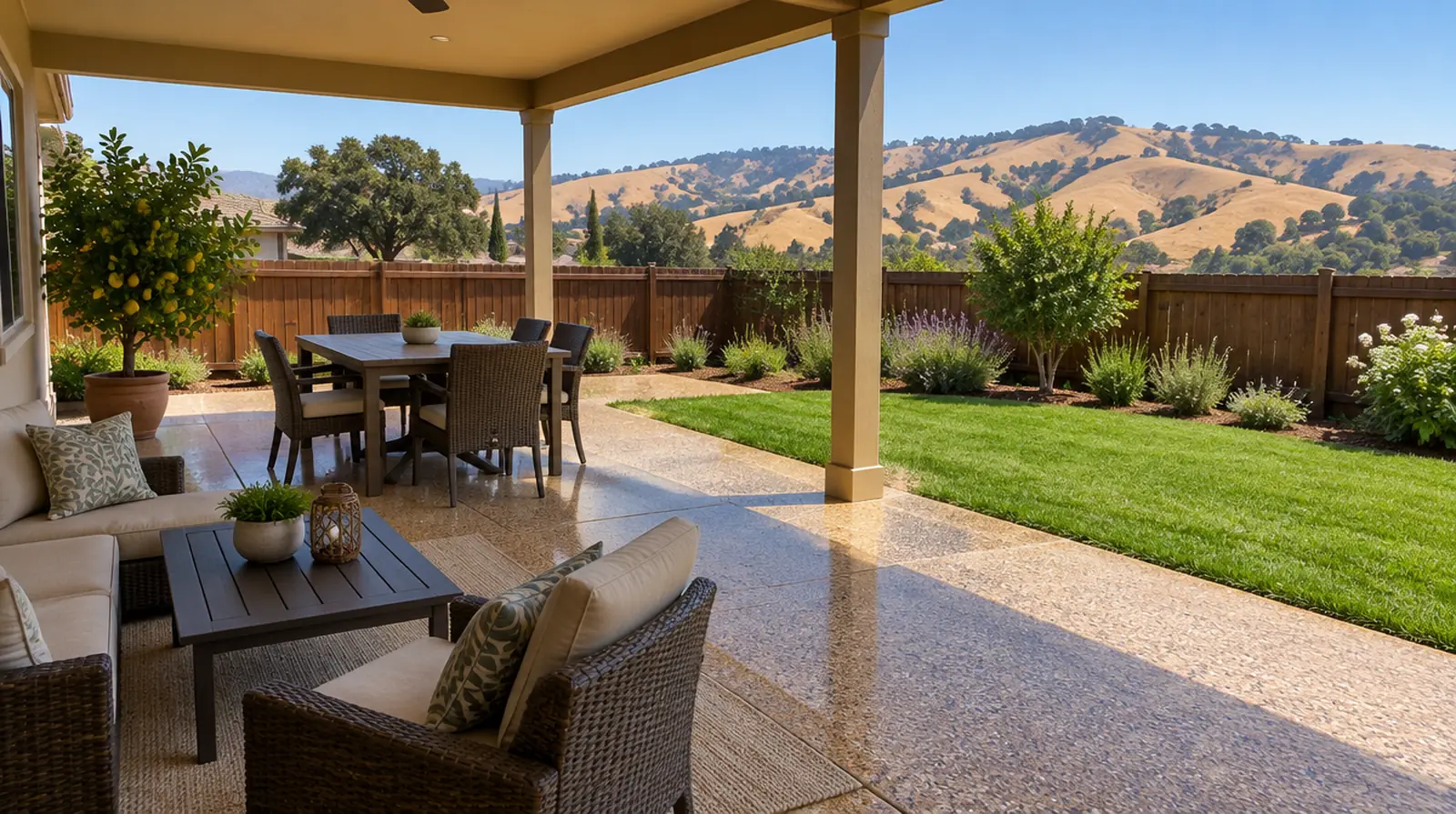
Because it handles UV, polyaspartic also works outdoors. Covered patios, front porches and the walkways around a backyard pool get a sealed, slip-resistant surface that does not fade. We add grit for footing, especially near water. For full open driveways, see our driveway coating page.
How a one-day floor works
- Morning: move-out, grinding, vacuuming and crack repair.
- Midday: base coat and flake broadcast.
- Afternoon: scrape and vacuum the loose flake, then roll on the clear topcoat.
- Next day: light use, and parking after about 24 hours in most weather.
Fast cure has one catch: the material sets quickly, so it takes an experienced crew to roll it out evenly. In summer heat it sets even faster, which is why we start early, work in smaller batches and keep the slab shaded.
Prep still matters most
Fast curing does not mean skipping steps. A polyaspartic coating rolled onto unground concrete will peel just like paint. We grind every floor, test it for moisture and repair cracks before any coating goes down. If a slab has high moisture, we may use a moisture-blocking epoxy primer under the polyaspartic layers.
Cost compared with epoxy
Polyaspartic material costs more than epoxy, so a full polyaspartic floor usually prices higher than an epoxy system. Many homeowners find the faster cure and sun resistance worth it. A hybrid floor with an epoxy base and polyaspartic topcoat sits in between. Your quote will show both options if you want to compare.
Polyaspartic questions
Can I really park the next day?
In most weather, yes. In very cool weather we may ask you to wait a little longer.
Does it smell?
There is an odor during application. It fades within a day or so. We ventilate the garage while we work.
Will it work on an old floor?
Yes, once the old coating and contamination are ground off.
When a fast cure really pays off
If your garage holds a second fridge, the kids' bikes and the only covered parking you have, a two- or three-day epoxy job is a real hassle. Polyaspartic gets you back in fast. It is also a good choice before a move-in, a home sale or a family event when you need the floor done quickly. Businesses use it too, for shops and storefronts that cannot afford to close for long.
Polyaspartic floors also hold up well to the dust and grit that blow in during the dry season. The hard, slick-free topcoat sweeps clean easily and resists scuffs from shoes and tools.
Caring for a polyaspartic floor
Day-to-day care is simple. Sweep or use a dust mop to pick up grit, and wash with warm water and a mild cleaner when the floor gets dirty. Skip harsh acids and citrus cleaners, which can dull the gloss over time. Put a mat under the spot where your car drips in the winter, and wipe up oil or brake fluid within a day or so. A floor treated this way will keep its color and shine for many years, even with daily parking.
Ask about a one-day floor
Call (669) 334-9920 for a free estimate.